What Nobody Tells You About the First Year: A Guide to Development

The milestone charts don't always tell the full story. Here's what's actually happening in your baby's first twelve months.
Every parent has googled a developmental milestone at 11pm and immediately regretted it.
Is it normal that my baby isn't doing that yet? Why does every checklist make me feel like we're behind?
The anxiety around milestones is one of the most consistent things new parents report. And it's almost entirely a product of how developmental information gets presented: as a checklist of things your baby should be doing by a specific age, rather than a wide range of normal development with enormous natural variation.
This is a more honest guide to what's actually happening in your baby's first twelve months, what genuinely matters, and what you can let go of.
The Most Important Thing First
Developmental milestones are ranges, not deadlines.
When a chart says a baby should be sitting by 6 months, it means the average baby sits around that age. The normal range is 4 to 9 months. A baby who sits at 9 months isn't delayed. They're at the far end of completely normal.
The dates on developmental charts represent averages across large populations, not the expected timeline for any individual child. Two babies with identical long-term outcomes can hit the same milestone three months apart. Both are fine.
What's Actually Developing in the First Twelve Months
The First Three Months: Sensory Architecture
Most parents focus on the visible milestones of the early months, lifting the head, tracking movement, the first smile. These matter. But what's happening underneath is more significant: your baby is building the neural architecture that will underpin everything that follows.
Sensory processing, the ability to take in, filter, and make sense of information from the environment, is being established right now. Every texture your baby touches, every sound they hear, every object they grasp and mouth is raw material for this process.
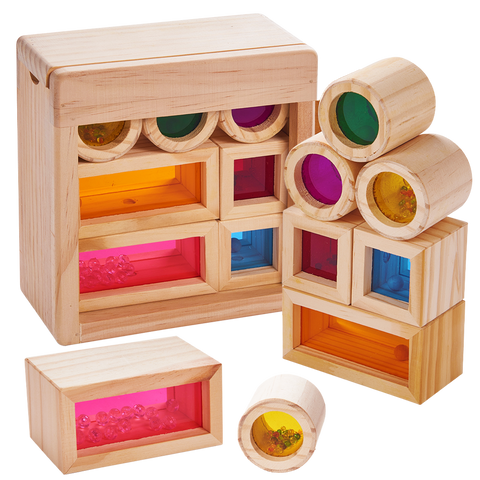
This is why sensory stimulation in the early months genuinely matters developmentally, not just as an activity to keep you occupied. Varied textures, gentle sounds, and objects of different weights and sizes are all doing real work. Our Sensory Sounds Blocks are designed from 10 months with exactly this in mind, each block different in texture, sound, and visual appearance.
Three to Six Months: Cause and Effect
From around 3 months, babies begin to understand that their actions produce predictable outcomes. This is one of the most foundational cognitive developments of the entire first year.
It starts simply: I cry, someone comes. I kick my legs, the mobile moves. I shake this, it makes a sound. Each of these is a hypothesis tested and confirmed. The baby is doing genuine scientific thinking at a level their brain is capable of.
This is why cause-and-effect toys in this period are genuinely valuable. Not because they're educational in a formal sense, but because they give babies the raw material to keep forming and testing these hypotheses.

Six to Nine Months: Object Permanence and Reaching
One of the most interesting developments of this window is object permanence, the understanding that things continue to exist even when you can't see them. Before this stage, out of sight genuinely is out of mind. After it, a baby will search for a hidden toy.
You'll also notice more intentional reaching, grasping, and transferring objects between hands. The hands are becoming tools for exploration. Everything goes in the mouth not because babies are being difficult but because the mouth has more sensory receptors than the hands at this stage. It's how they gather information.
Nine to Twelve Months: The Social Brain Awakens
The final quarter of the first year brings some of the most striking developments. Babies begin to point, which seems simple but is actually a profound cognitive milestone: it requires understanding that other people have minds that can be directed to things. It's the beginning of shared attention, the basis of language and social learning.
First words typically appear around this time too, though the normal range extends well into the second year. What matters more than first words is whether your baby is communicating, through sounds, gestures, facial expressions, and eye contact. Language is the output. Communication is the underlying capacity.
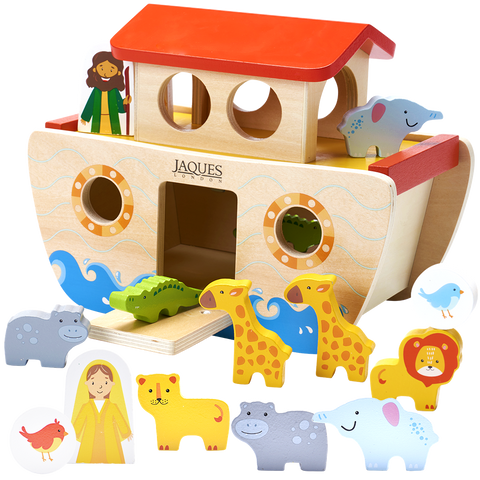
Our Pull Along Shape Sorter from 12 months is a brilliant toy for this stage, posting shapes satisfies the grasping and problem-solving urges, and the pull-along element supports the new walking confidence many babies are developing right now.

When to Actually Speak to Someone
Most milestone anxiety is unnecessary. But some isn't. The signs that genuinely warrant a conversation with your health visitor or GP are different from the normal variation that parenting forums catastrophise.
Speak to someone if your baby isn't making eye contact by 3 months, isn't smiling responsively by 3 months, isn't reaching for objects by 6 months, isn't babbling by 9 months, or isn't pointing or waving by 12 months. These aren't reasons to panic. They're reasons to get a professional opinion sooner rather than later, because early support, if it's needed, is always more effective than late support.
What You Can Actually Do
The most important thing parents can do for development in the first year is not a specific activity or a specific toy. It's responsiveness. Responding to your baby's sounds, faces, and gestures. Following their lead. Talking to them about what's happening, narrating the day.
This is called serve and return interaction, and it's the single most evidence-based thing parents can do to support early brain development. It costs nothing and requires no special equipment.
Everything else, the toys, the classes, the activities, is secondary. Good, worth doing, genuinely helpful. But secondary.
Frequently Asked Questions
What developmental milestones should I watch for in the first year? The key ones are: social smiling by 3 months, reaching for objects by 6 months, sitting with support by 6 months, babbling by 9 months, pulling to stand by 12 months, and first words around 12 months (though this has a wide normal range). What matters more than any single milestone is overall responsiveness, curiosity, and engagement with people and objects.
My baby isn't hitting milestones on schedule. Should I be worried? Probably not, because milestones are ranges not deadlines. But if you're concerned, always speak to your health visitor or GP. That's what they're there for. Early assessment is always better than waiting to see.
How much tummy time does my baby actually need? The NHS recommends starting tummy time from birth, building up gradually to around 30 minutes total per day by 3 months. Short, frequent sessions are better than longer ones. Always supervised, always on a firm flat surface, and always when your baby is awake and alert.
What's the most important thing I can do for my baby's development in the first year? Talk to them, respond to them, follow their lead. The serve and return interaction between a baby and a responsive caregiver is more developmentally significant than any toy or activity. Everything else is supportive, but this is foundational.
Jaques of London, 230 years of understanding what children need and when they need it.