Sensory Play for Toddlers: What It Actually Is and Why It Matters

It's not just messy. It's some of the most important developmental work a young child can do.
"Sensory play" has become one of those terms that gets thrown around a lot in parenting circles, usually alongside a photo of a child covered in paint or elbow-deep in a tray of rice.
And yes, that counts. But sensory play is much broader, much quieter, and much more constant than most parents realise. And for children between 10 months and 3 years old, it's doing some of the most serious developmental work of their entire childhood.
Here's what it actually is, why it matters, and how the right toys deliver it.
What Is Sensory Play?
Sensory play is any play that actively engages one or more of a child's senses in a way that builds neural connections.
That includes touch, obviously, different textures, temperatures, and weights. But it also includes sound, sight, proprioception (the sense of where their body is in space), and the vestibular system (balance and movement). Any toy or activity that deliberately engages these systems is sensory play.
What makes it developmental rather than just fun is the processing. When a child picks up a wooden block and notices its weight and grain, their brain is filing new information. When a baby shakes a rattle and hears a sound, they're making a causal connection. When a toddler pours water from one container to another, they're building a physical model of volume and flow that no amount of explaining could replicate.
The brain learns what the hands discover.
Why Sensory Play Matters for 1, 2, and 3-Year-Olds
In the first three years of life, the brain forms more neural connections than at any other point. Sensory experiences are the raw material for those connections. Children who have rich, varied sensory play experiences in this window are building a more complex neural architecture than those who don't.
More specifically, sensory play has been linked to language development, with children naturally describing what they're experiencing and building vocabulary from new textures, sounds, and sensations. It supports cognitive development through comparing, categorising, predicting, and testing. It aids emotional regulation, with sensory-rich tactile play genuinely helping children manage their nervous system. And it builds both fine and gross motor skills through manipulating objects of different sizes, weights, and textures.
The Best Sensory Toys for Toddlers
For 10 Months to 12 Months
At this age, sensory play is mostly about exploration. Mouthing, banging, shaking, dropping, squeezing. Toys that respond clearly to these actions, whether with sound, movement, or visual change, are doing the most valuable work.
Our Sensory Sounds Blocks are designed from 10 months with exactly this in mind. Each block has a different sound and texture, giving babies rich sensory variety in a single toy. Every shake is a new discovery.
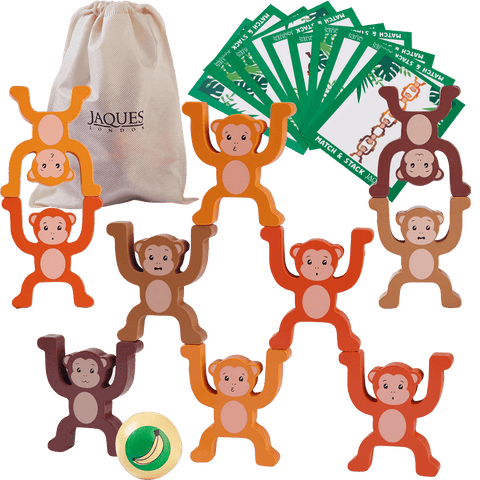
Our Stacking Monkeys and Crazy Cats Stacking Toy, both from 10 months, offer the sensory experience of different shapes and sizes with the added challenge of balance, children can feel the difference in weight and proportion before they have the words for it.

For 12 Months to 2 Years
Now children are on the move and beginning to use their hands with more intention. Sensory play at this age involves more deliberate exploration, filling and emptying, posting and retrieving, combining objects and separating them.
Our Activity Cube from 12 months packs multiple sensory experiences into one toy, different panels, different actions, different outcomes. It's a sensory buffet for a 1-year-old.
Our Noah's Ark from 10 months is another brilliant option. The different animal shapes, sizes, and textures give children rich tactile input while the loading and unloading adds the satisfying proprioceptive feedback of filling a space and emptying it again.
For 2 to 3 Years
By 2, children can engage with more complex sensory challenges. They're ready to process sensory information and act on it with purpose, matching by feel as well as sight, noticing differences in weight and density, and using sensory information to solve simple problems.
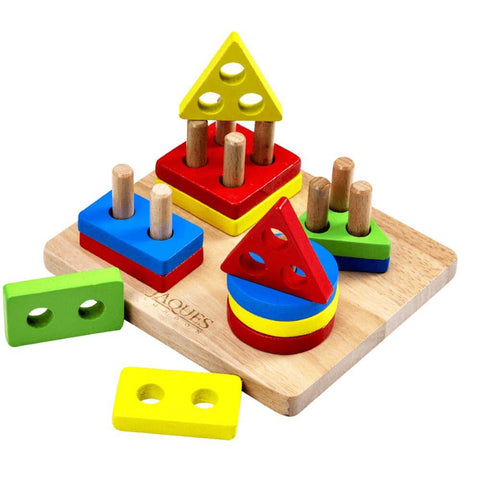
Our Geometric Shape Puzzle is designed from 10 months and becomes a genuinely rich sensory experience by age 2, with children running their fingers around the shapes, comparing them, and selecting by touch as well as sight.
Our Rainbow Shape Puzzles from 12 months and our Jungle Puzzles from 12 months both deliver the tactile satisfaction of fitting pieces, lifting them out, and replacing them that 2-year-olds find irresistible.

For 3-Year-Olds
Three-year-olds are ready for sensory play that involves real-world processes. Water, sand, mud, construction, music. This is the age where sensory play and imaginative play start to overlap beautifully.
Our Mud Kitchen from age 3 is one of the most powerful sensory-imaginative toys available, combining the deep sensory input of real outdoor materials with the rich imaginative potential of a kitchen play scenario.
For indoor sensory play, our Colour Stacker from age 3 and our Animal Tumble Tower from age 3 both deliver the tactile satisfaction of careful physical manipulation with visual and auditory feedback when things go right, or beautifully wrong.
A Note on Wooden Toys and Sensory Play
Wood is, by its nature, a sensory material. Its weight, grain, temperature, and texture give children more sensory information per interaction than plastic. That natural feedback is one of the reasons wooden toys are so consistently recommended by Montessori educators and sensory play specialists, the material itself is doing developmental work before the toy even "does" anything.
All Jaques of London toys are made with non-toxic, water-based paint and independently tested to UKCA and CE toy safety standards, so children can handle, mouth, and explore them with complete safety.
Frequently Asked Questions
What counts as sensory play for toddlers? Any play that actively engages the senses and involves a child processing what they're experiencing. Stacking blocks, pouring water, moulding clay, feeling different textures, shaking rattles, and fitting puzzle pieces are all sensory play. It doesn't have to be messy to count.
How often should toddlers do sensory play? Daily, ideally. The good news is that most regular toddler play already qualifies. The goal isn't to set up elaborate sensory activities every day, it's to ensure children have access to toys that engage their senses meaningfully rather than passive entertainment that bypasses them.
What are the best sensory toys for a 1-year-old? Toys with varied textures, clear cause-and-effect responses, and satisfying physical feedback are ideal. Our Sensory Sounds Blocks, Stacking Monkeys, and Activity Cube are all designed from 10 to 12 months and cover multiple sensory channels at once.
Is wooden sensory play better than plastic? Wood has natural sensory properties that plastic lacks, weight, grain, temperature variation, and a satisfying resistance when objects are manipulated. For sensory-rich play, wooden toys consistently outperform plastic alternatives. They also contain no BPA or microplastics, which matters when children are mouthing toys.
Jaques of London, sensory-rich toys made from natural materials, since 1795.