Grandparents: You're More Important Than You Think

There's a tendency to frame grandparent involvement in children's lives as a nice-to-have. A bonus. Something lovely when it happens, not essential.
The research says otherwise.
The relationship between a grandparent and a grandchild is one of the most developmentally significant bonds a child can have outside their immediate family, and its effects carry forward in ways that are measurable, consistent, and genuinely surprising.
This one's for the grandparents who are showing up, and the parents who should know why it matters.
What the Research Actually Shows
A long-running study from the University of Oxford tracked over 1,500 children and found that grandparental involvement was associated with fewer emotional and behavioural problems, better social adjustment, and stronger peer relationships. These effects were significant, not marginal.
A separate body of research from Emory University found that children who knew their family stories, including the stories their grandparents told, had higher self-esteem, stronger resilience in the face of adversity, and better outcomes across multiple wellbeing measures.
The mechanism is not complicated. Children who have strong grandparent relationships have more adults who are genuinely invested in them. More perspectives. More stories. A broader sense of where they come from. That sense of belonging turns out to matter enormously.
What Grandparents Uniquely Offer
It's worth being specific about what grandparents bring that parents, however loving and present, often can't.
Time at a different pace. Many grandparents have time that parents in full-time work simply don't. Time to sit on the floor and build something. Time to read the same book for the sixth time without glancing at a phone. Time to answer questions properly. That unhurried quality of attention is rare and developmentally valuable.
Permission to try things. Research on grandparent play consistently finds that grandparents tend to be more permissive in play settings than parents, more willing to let children take the lead, less anxious about mess or minor risks. That permissiveness is actually beneficial. It signals to children that their choices are valid and their instincts trustworthy.
Stories and context. A grandparent is a living archive of family history. The stories they tell about parents as children, about their own childhood, about where the family comes from, give grandchildren a sense of continuity and identity that nothing else can replicate.
Unconditional regard. The grandparent relationship is often described by children as a space where they feel wholly accepted. Not parented at. Not managed. Just loved. That experience of unconditional positive regard is a significant protective factor in children's mental health.

The Toys That Make Grandparent Time Work
The best grandparent-grandchild play sessions have something in common: they're anchored around a toy or activity that invites both of them in, rather than one that entertains the child while the adult watches.
Traditional games and open-ended toys are the best at this. They don't require batteries or instructions. They meet children at whatever developmental stage they're at. And they generate the kind of shared activity that creates the memories both generations carry forward.
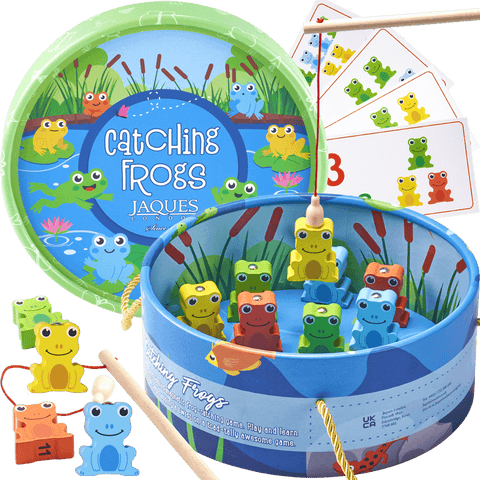
Our Catching Frogs from 12 months is a perfect example. A grandparent and a 2-year-old can sit across from each other and play properly together. It's physical enough to be engaging, simple enough to need no explanation, and the mild competitiveness of taking turns makes it genuinely fun for both.
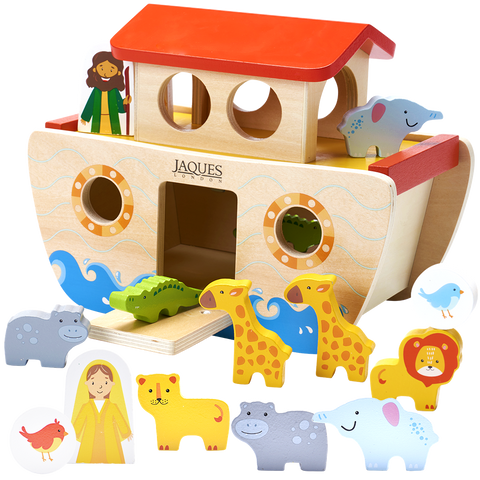
Our Noah's Ark from 10 months generates hours of joint storytelling. A grandparent and a toddler loading animals together, naming them, deciding which goes first, is exactly the kind of shared narrative play that researchers identify as most developmentally rich.
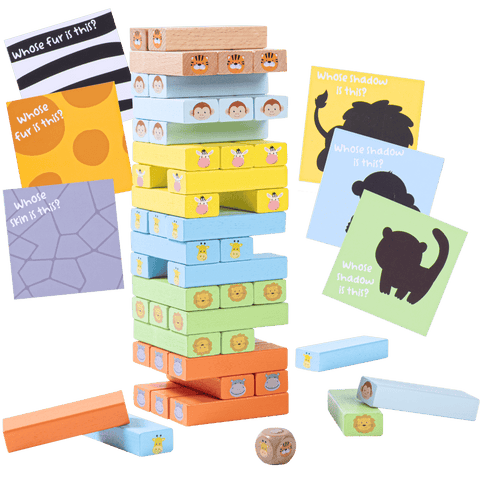
For a 3-year-old who's ready for a proper game, our Animal Tumble Tower from age 3 is the kind of game that grandparents and grandchildren play together repeatedly, because the tension of a teetering tower is genuinely exciting at any age.
For Grandparents Who Worry They're Getting It Wrong
There's a version of grandparent anxiety that doesn't get talked about enough. The grandparent who wants to be involved but isn't sure what that looks like. Who worries about overstepping, or doing things differently from how the parents do them, or not knowing what children this age are supposed to be doing.
Here is the short answer: your presence is the point.
The toys, the activities, the games are vehicles. What children remember is not the specific thing you did but the quality of attention you brought to it. A grandparent who sits on the floor and stacks blocks badly, and laughs about it, and does it again, is doing something irreplaceable.
You don't need to be educational. You don't need to be Pinterest-worthy. You need to show up and be genuinely interested in them. Children are very good at detecting genuine interest, and it matters to them more than almost anything else.

When Geography Gets in the Way
Not every grandparent lives around the corner. Many are managing relationships with grandchildren across significant distances, whether across the country or across the world.
The research on long-distance grandparent relationships shows that frequency of contact matters less than quality and consistency. A video call every Sunday where a grandparent reads a story, plays a simple game, or just talks about their week maintains a bond that the child experiences as real and present.
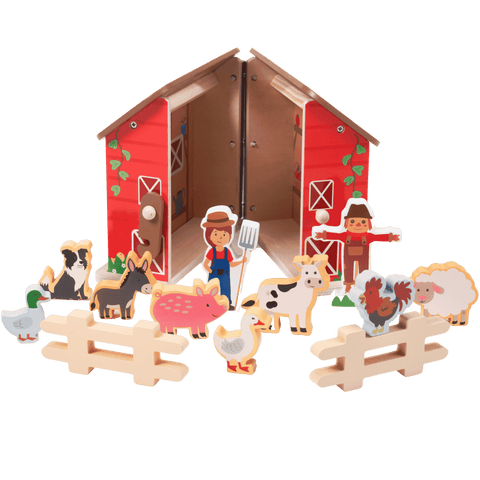
Sending a toy that becomes associated with that relationship is one of the most practical things a long-distance grandparent can do. When the Friendly Farm arrives in the post from Grandma, and then Grandma asks about the animals on the next call, and remembers their names, the object becomes a bridge.
Frequently Asked Questions
How important are grandparents to a child's development? Very. Research consistently shows that involved grandparents are associated with better emotional regulation, stronger resilience, higher self-esteem, and better social outcomes in children. The relationship is one of the most significant outside the immediate parent-child bond.
What can grandparents do to bond with young grandchildren? Follow the child's lead. Get on the floor with them. Read the same book multiple times without complaint. Tell stories about when their parents were small. Play simple games side by side. The quality of attention matters far more than the specific activity.
What are good toys for grandparents to play with grandchildren? Traditional games and open-ended wooden toys are best because they invite both generations in rather than just entertaining the child. Simple games with a turn-taking structure, imaginative play sets, and stacking or building toys all work well across a wide age range.
How do grandparents maintain relationships with grandchildren from a distance? Consistent, regular contact matters more than frequency. Video calls with a specific activity, like reading a story together, work well. Sending gifts that become associated with the relationship creates a physical anchor for the bond between visits.
Jaques of London, connecting generations through play, since 1795.